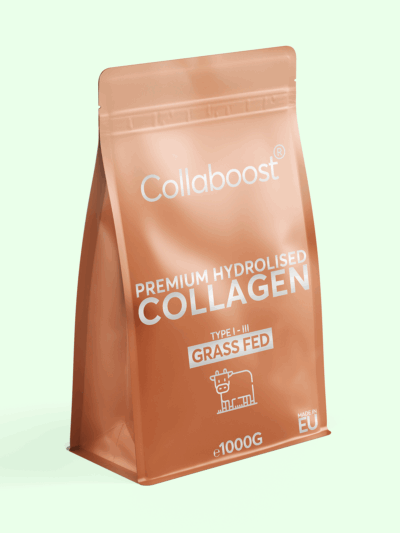
After your twenties, your body starts to change in subtle, but important ways. One significant change is a gradual decline in collagen production. Collagen is the most abundant protein in your body and plays a critical role in skin elasticity, joint health, connective tissue and more.
This is why hydrolysed collagen supplementation after your twenties is increasingly recommended by health professionals, athletes and skincare experts alike.
In this article, we explain what hydrolysed collagen is, why collagen levels decline after your twenties and how supplementing can support your body from the inside out.
What Is Hydrolysed Collagen?
Hydrolysed collagen (also known as collagen peptides) is collagen that has been broken down into smaller, biologically active amino acid chains through a process called hydrolysis.
Why Hydrolysed Collagen Matters
- Easier to digest and absorb than regular collagen
- Rapidly enters the bloodstream
- Highly biologically active for skin, joints and connective tissue
Tasteless and easy to mix with water, coffee or any drink you like
Due to its superior absorption, hydrolysed collagen is the most effective form of collagen supplementation.
Collagen Production Declines After Your Twenties
From around the age of 25, your body’s natural collagen production decreases by approximately 1% per year. While this decline may not be immediately visible, its effects accumulate over time.
Common Signs of Collagen Loss
- Fine lines and reduced skin elasticity
- Joint stiffness or discomfort
- Weaker hair and brittle nails
- Slower recovery after exercise
- Reduced bone density over time
Lifestyle factors such as stress, UV exposure, poor sleep, smoking, alcohol and high sugar intake can accelerate collagen breakdown even further.
Key Benefits of Hydrolysed Collagen After 25
1. Supports Skin Elasticity and Firmness
Collagen is responsible for keeping skin smooth, firm and hydrated. Supplementing with hydrolysed collagen helps:
- Improve skin elasticity
- Reduce the appearance of fine lines
- Support long(er) term skin structure
Many users notice visible improvements in skin texture within 8 – 12 weeks of consistent use.
2. Promotes Joint and Connective Tissue Health
As collagen levels drop, joints and tendons become more vulnerable to wear and tear.
Hydrolysed collagen:
- Supports cartilage regeneration
- Helps maintain joint flexibility
- Reduces exercise related joint discomfort
This makes it especially beneficial for active individuals and those with physically demanding lifestyles.
3. Strengthens Hair and Nails
Hair and nails are largely composed of structural proteins that rely on collagen derived amino acids.
Regular collagen supplementation can:
- Reduce nail brittleness
- Support thicker, stronger hair
- Improve hair growth quality over time
4. Supports Muscle Recovery and Bone Health
Collagen contains glycine, proline, and hydroxyproline, which are amino acids that are essential for:
- Muscle repair
- Bone density maintenance
- Injury recovery
After your twenties, recovery naturally slows. Hydrolysed collagen helps counteract this process.
5. Supports Gut and Overall Structural Health
Collagen plays a key role in maintaining the integrity of the gut lining and connective tissues throughout the body.
This contributes to:
- Better nutrient absorption
- Improved gut comfort
- Long(er) term structural resilience
Why Start Collagen Supplementation Early?
Many people wait until visible aging appears, but by then, collagen depletion is already well underway.
Starting in Your Twenties Helps:
- Preserve existing collagen levels
- Slow visible aging processes
- Support long(er) term joint and skin health
- Build a proactive wellness routine
Collagen works best as prevention!
How to Use Hydrolysed Collagen
For best results:
- Take ~ 10 grams daily
- Consume consistently (daily use matters more than timing)
- Combine with vitamin C, which supports collagen synthesis
- Mix easily into water, coffee, tea, smoothies, yogurt or any drink you’d like!
Hydrolysed collagen is flavorless and fits seamlessly into any routine.
Choosing a High Quality Hydrolysed Collagen
When selecting a collagen supplement, look for:
- 100% hydrolysed collagen peptides
- No added sugars or fillers
- Neutral taste and high solubility
- Transparent sourcing and production standards
Quality matters! Your body uses what you give it.
Final Thoughts: Collagen Is an Investment in Your Future Health
Using hydrolysed collagen after your twenties isn’t about chasing youth, it’s about supporting your body as it naturally changes.
By supplementing early and consistently, you help maintain:
- Healthy skin
- Strong joints
- Resilient hair and nails
- Better recovery and structural support
Your body produces less collagen every year. Supporting it now can make a meaningful difference later.
Frequently Asked Questions About Hydrolysed Collagen
At what age should you start taking hydrolysed collagen?
You should start taking hydrolysed collagen around the age of 25. From this age onward, the body’s natural collagen production gradually starts to decline, which can affect skin elasticity, joint health and recovery. Starting early helps preserve existing collagen levels rather than trying to rebuild them later.
What is hydrolysed collagen and why is it better absorbed?
Hydrolysed collagen is collagen that has been broken down into small peptides, making it easier for your body to digest and absorb. Due to its low molecular weight, hydrolysed collagen is rapidly absorbed into the bloodstream and efficiently used by your body to support skin, joints, connective tissue and more.
How long does it take for hydrolysed collagen to work?
Most people begin to notice results from hydrolysed collagen within 8 to 12 weeks of daily use. Skin hydration and nail strength often improve first, followed by joint comfort and hair quality. Consistency is more important than timing for optimal results.
How much hydrolysed collagen should you take daily?
The recommended daily intake of hydrolysed collagen is ~ 10 grams per day. This dosage is supported by clinical research and is sufficient to support skin, joint and connective tissue health when taken consistently.
Should hydrolysed collagen be taken with vitamin C?
Yes, hydrolysed collagen should ideally be taken with vitamin C. Vitamin C is essential for collagen synthesis in your body and helps convert collagen peptides into usable collagen fibers, maximizing the supplement’s effectiveness.
Is hydrolysed collagen safe for long-term daily use?
High quality hydrolysed collagen is considered safe for long term daily use in healthy adults. It is a naturally occurring protein in your body and is well tolerated when sourced responsibly and consumed according to recommended guidelines.
Do collagen supplements actually work?
We’d like to believe so, scientific studies show that collagen peptides can support skin elasticity, joint function, bone strength and connective tissue health when taken consistently. Results depend on dosage, product quality and overall lifestyle factors, such as nutrition and sun exposure.